
In today’s competitive environment, businesses need an efficient and automated accounting system to stay compliant and make informed decisions. Odoo offers a powerful accounting module that helps manage finances, automate processes, and generate real-time reports.
However, the real value lies in proper Odoo Accounting Configuration. A well-configured system ensures accuracy, compliance, and seamless integration with your business operations.
In this guide, we’ll walk you through a step-by-step Odoo Accounting setup, including GST configuration, chart of accounts, and best practices.
What is Odoo Accounting Configuration?
Odoo Accounting Configuration refers to setting up the accounting module in Odoo based on your business structure, compliance requirements, and reporting needs.
It includes:
- Chart of Accounts setup
- Odoo GST setup (India) / VAT configuration
- Journals and payment methods
- Fiscal positions
- Bank integration
- Financial reporting setup
This process ensures your system is aligned with Odoo ERP for accounting and financial management.
Why Odoo Accounting Setup is Important
A proper Odoo Accounting Setup is critical for avoiding errors and ensuring smooth financial operations.
Key Benefits:
- Accurate financial reporting
- Automated tax calculations (including Odoo GST setup India)
- Compliance with local regulations
- Real-time financial visibility
- Reduced manual errors
Step-by-Step Odoo Accounting Setup Guide
1. Chart of Accounts Setup in Odoo
The Chart of Accounts (COA) forms the backbone of your accounting system.
In Odoo:
- Use country-specific templates
- Customize accounts based on your business
- Create sub-accounts for detailed tracking
A structured COA improves:
- Financial clarity
- Reporting accuracy
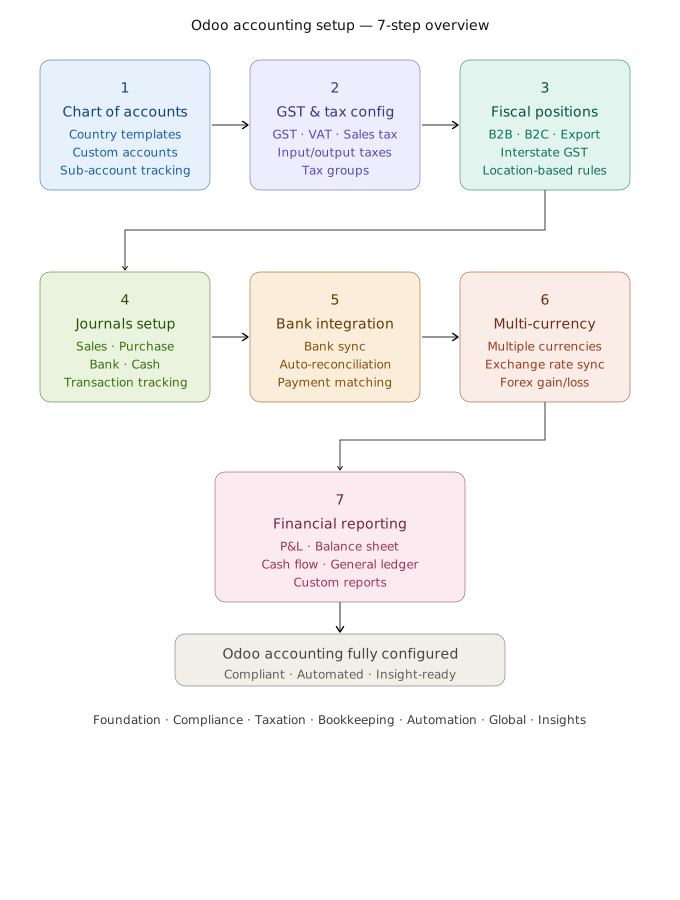
2. Odoo GST Setup (India) & Tax Configuration
Tax configuration is one of the most important steps in Odoo Accounting Implementation.
You can configure:
- GST (India), VAT, or Sales Tax
- Input and Output taxes
- Tax groups and reporting
Proper Odoo GST setup in India ensures:
- Accurate GST returns
- Correct invoice generation
- Full compliance
3. Fiscal Positions Configuration
Fiscal positions help manage taxation rules based on:
- Customer location
- Business type (B2B, B2C, Export)
This is essential for:
- Interstate vs intrastate GST
- Export transactions
4. Journals Setup in Odoo Accounting
Journals represent different types of transactions.
Common journals include:
- Sales Journal
- Purchase Journal
- Bank Journal
- Cash Journal
Proper journal setup ensures:
- Accurate bookkeeping
- Smooth transaction tracking
5. Bank Integration & Payment Configuration
Odoo supports bank integration for automation.
Features include:
- Bank synchronization
- Automated reconciliation
- Payment matching
This simplifies your Odoo bookkeeping setup and reduces manual effort.
6. Multi-Currency Configuration
For global businesses, Odoo supports:
- Multiple currencies
- Automatic exchange rate updates
- Forex gain/loss tracking
7. Financial Reporting Setup in Odoo
Odoo provides real-time financial reports such as:
- Profit & Loss Statement
- Balance Sheet
- Cash Flow Statement
- General Ledger
With proper Odoo financial management setup, businesses can:
- Customize reports
- Make data-driven decisions
- Track performance effectively
Schedule an Appointment with Odoo Expert
Common Challenges in Odoo Accounting Configuration
While Odoo is powerful, improper setup can lead to issues like:
- Incorrect Chart of Accounts mapping
- Errors in GST or tax setup
- Misconfigured fiscal positions
- Data migration challenges
- Integration issues with other modules
These can result in:
- Incorrect financial reports
- Compliance risks
- Operational inefficiencies
Best Practices for Odoo Accounting Configuration
To ensure a successful Odoo Accounting Implementation, follow these best practices:
- Understand your business processes before setup
- Use standard templates but customize carefully
- Ensure proper Odoo GST configuration for India
- Test the system before going live
- Train your team
- Work with experienced Odoo accounting consultants
How Odoo Accounting Integrates with Other Modules
One of the biggest advantages of Odoo is seamless integration.
- Sales → Automatic invoice generation
- Purchase → Vendor bill creation
- Inventory → Stock valuation entries
- Payroll → Salary and tax entries
This makes Odoo a complete solution for ERP accounting and financial management.
Conclusion
A well-planned Odoo Accounting Configuration is essential for building a scalable and efficient financial system.
Whether you’re a startup or a growing business, the right setup can:
- Improve financial accuracy
- Ensure compliance
- Automate processes
- Support business growth
If you're looking for Odoo accounting implementation or expert guidance, investing in proper configuration is the key to long-term success.
Need Help with Odoo Accounting Configuration?
At R Taparia & Associates, we specialize in:
- Odoo Accounting Setup & Implementation
- Odoo GST Setup (India)
- Financial reporting and automation
- ERP advisory and optimization
Let’s help you build a smarter, scalable accounting system.
📌 Interested in implementing Odoo ERP for your business? Our team of Odoo Consultant can help you plan the right modules, workflows, and rollout strategy.
Schedule an Appointment with Odoo Expert